A Camera-Based Approach to Vehicle Classification
Accurate vehicle classification is an important part of managing and monitoring road infrastructure. Traditionally, axle detection can rely on inductive loops and other sensors installed directly in the pavement, requiring intervention in the roadway during installation and maintenance.
At the Rutas del Valle concession in Valle del Cauca, Colombia, a camera-based approach was implemented to detect vehicle axles and provide the data needed for vehicle classification, without relying on intrusive sensors embedded in the road surface.
Adaptive Recognition partner DEVITECK supplied Vidar Axle cameras to Cardinale Scale, whose engineering team installed and integrated the technology as part of the concession’s vehicle classification system.
Moving Axle Detection Above Ground
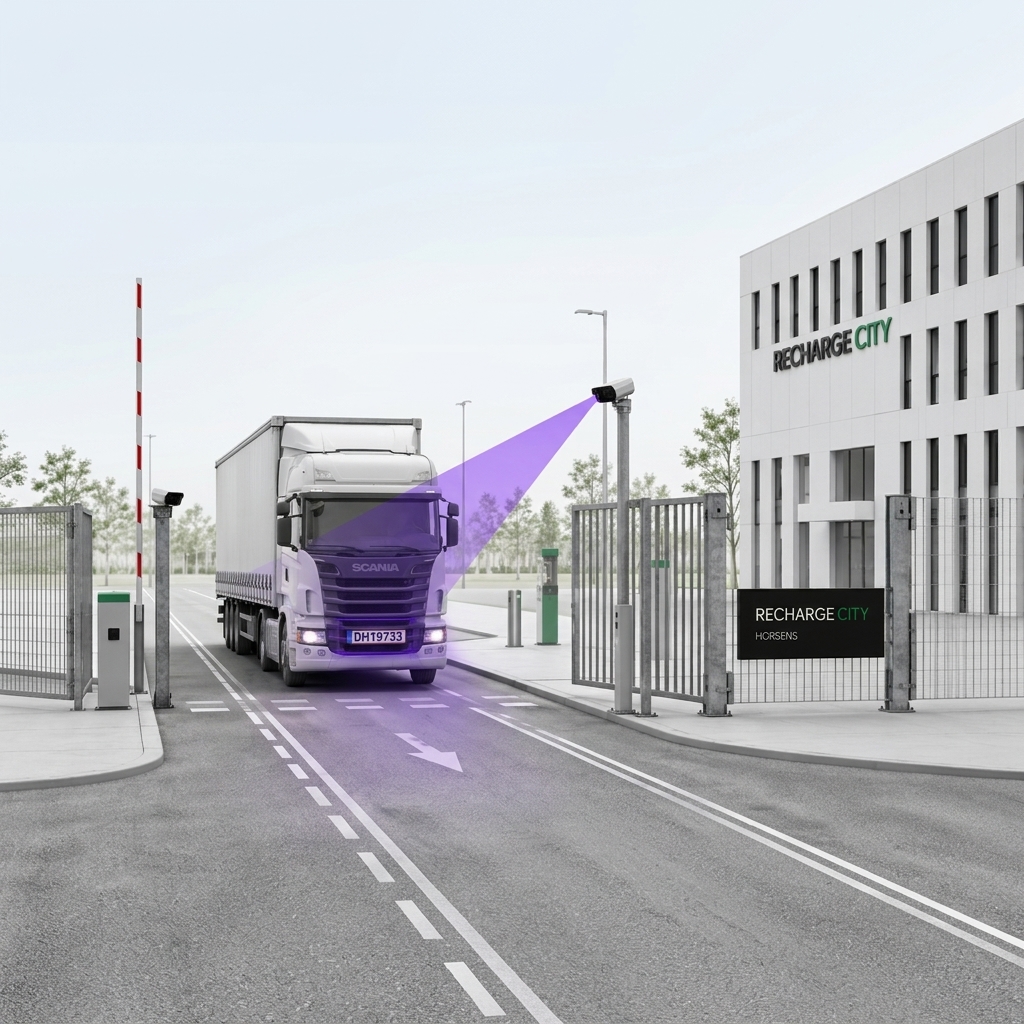
Vidar Axle uses computer vision to identify vehicle axles as traffic passes through the weigh stations. This information is then correlated with the weighing process and used by the wider system to determine vehicle configuration and validate the assigned category.
By moving axle detection above ground, the system reduces dependence on detection technologies embedded in the pavement. This simplifies installation and maintenance while providing the vehicle data required for classification, monitoring and operational management.
Each weigh station uses one Vidar Axle camera to monitor a single lane. The camera is integrated with the weighing system, PLC and other control components, creating an automated workflow for processing vehicles as they pass through the station.

Supporting Continuous Road Operations
The system was designed to operate continuously in a high-traffic environment, with reliable detection required across changing lighting and weather conditions. Integration also had to be completed without disrupting operation of the road corridor.
Approximately 480–600 vehicles are identified and processed each day, with axle information integrated into the weighing and classification process.
The data also supports auditing of vehicle classifications. By comparing detected axle configurations with the classification recorded by the system, operators can identify inconsistencies and improve traceability throughout the process.
Technology and Local Integration
The project combines Adaptive Recognition technology with local engineering and integration expertise. DEVITECK supplied the Vidar Axle hardware together with commercial and technical support, while Cardinale Scale carried out the installation and system integration.
For Rutas del Valle, this provides a non-intrusive approach to axle detection that delivers real-time vehicle information while reducing reliance on infrastructure installed directly in the roadway.