

Show more

Read more

View product

View report

Drag

Evidence-Ready Vehicle Recognition
for Traffic Enforcement

Capture license plates, vehicle data, and enforcement records for speed, red-light, and seatbelt enforcement workflows where accuracy must hold up under review.

Traffic Enforcement Across
Different Roadside Scenarios

Vehicle recognition and capture technology for fixed, mobile, intersection, and multi-point enforcement systems where vehicle data must remain clear, structured, and reviewable.

Traffic Violation
Enforcement

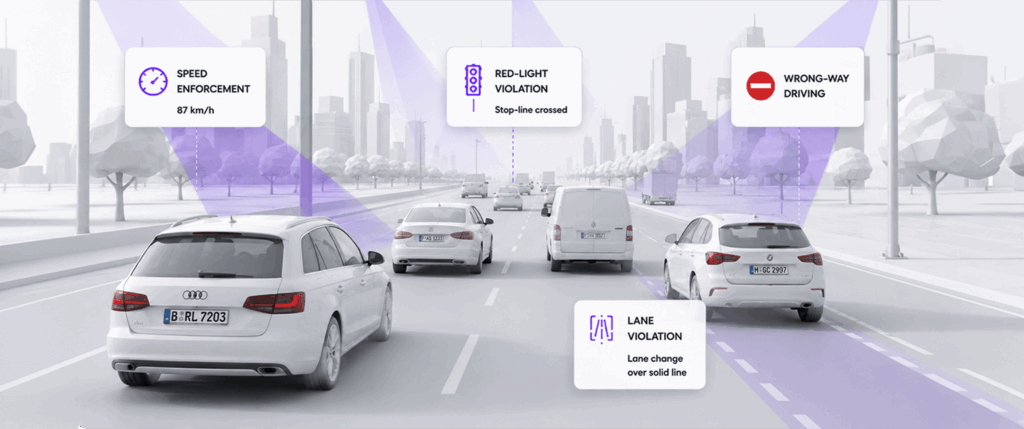
Identify vehicles and capture enforcement events across speed, intersection, lane, and other traffic violation enforcement deployments.

Traffic Violation
Enforcement

Driver Safety
Enforcement

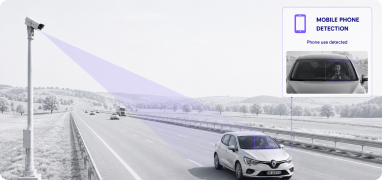
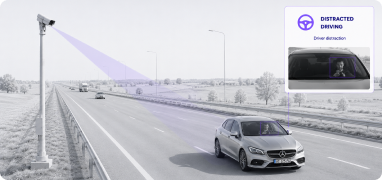
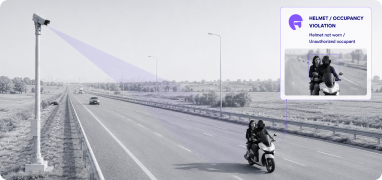
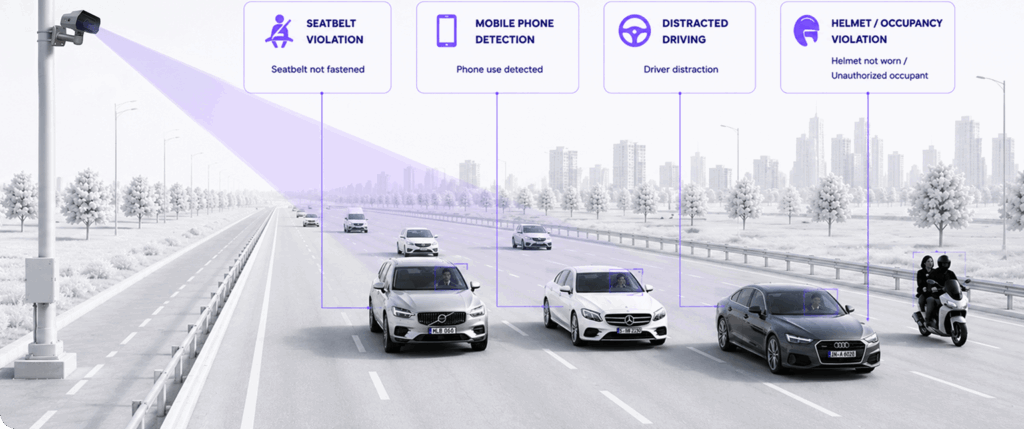
Support review of seatbelt, mobile phone, distracted driving, and other driver-related violations by connecting visual evidence to the vehicle record.

Driver Safety
Enforcement

Vehicle Compliance
Enforcement

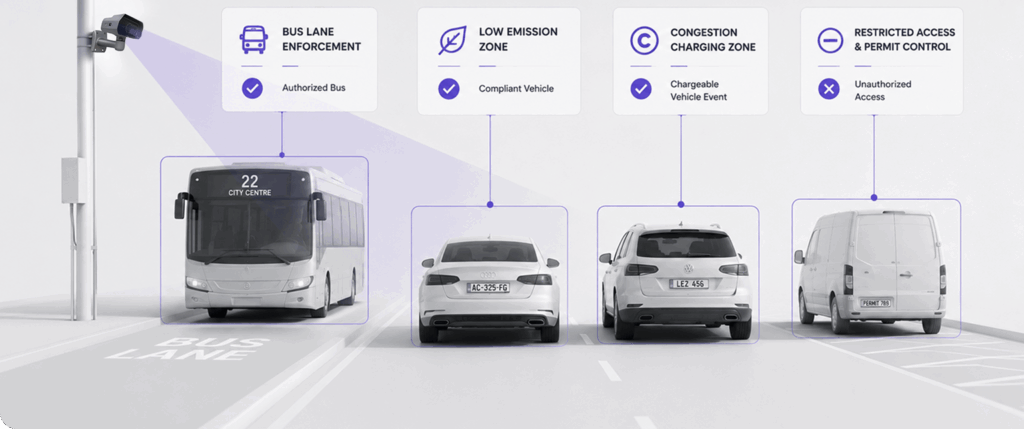
Verify vehicle compliance across restricted zones, environmental programs, road usage controls, and other regulated vehicle access deployments.

Vehicle Compliance
Enforcement

Enforcement Records
Built from Roadside Capture

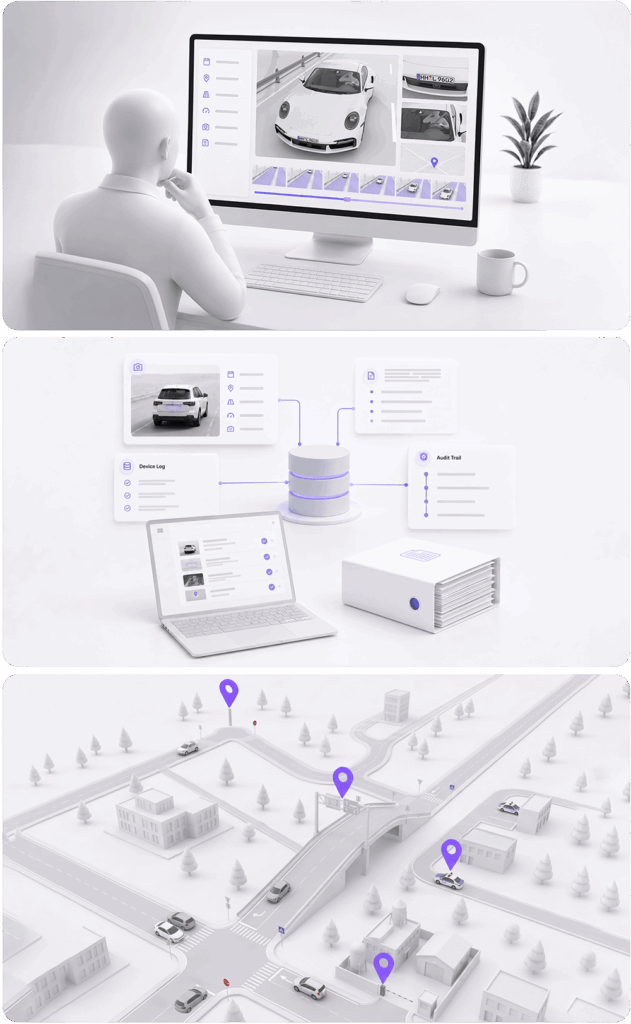
Traffic enforcement starts at the capture point. The system must identify the vehicle, preserve the context of the event, and deliver data that can move into review and enforcement workflows without losing clarity.

Vehicle Identity at the Point of Enforcement

Vehicle identity must stay linked to the captured event across speed, intersection, and driver-related enforcement workflows.

  • License plate recognition
  • Country / state recognition
  • Vehicle make, model, color, and category data
  • Vehicle images linked to the captured event
  • Recognition data generated at the enforcement point
Event Details That Stay Connected

Traffic enforcement records depend on more than the plate read. The surrounding event details must remain tied to the vehicle as the record moves through review.

  • Time and capture-point reference
  • Lane and location context
  • Speed-related data where applicable
  • Signal or intersection context where applicable
  • Event metadata for review and processing
Output Built for Enforcement Workflows

Vehicle and event data must be delivered in a format that enforcement systems can use without adding unnecessary interpretation or manual handling.

  • Structured vehicle and event records
  • API / SDK-based delivery
  • Integration with enforcement and review platforms
  • Centralized device and event management through GDS
  • Support for monitoring and lifecycle continuity

Planning a Traffic Enforcement Deployment?


Beyond
the Enforcement Event

Capturing a vehicle is only one part of the process. Enforcement programs depend on structured records, centralized management, and operational support that remain reliable long after the event occurs.

Consistent Recognition Across Deployments
The same vehicle recognition logic can be used across traffic violation, driver safety, and vehicle compliance enforcement deployments, helping maintain consistency across programs and locations.
Structured Records Built for Review
Vehicle identity, event context, images, and supporting metadata remain connected as records move from capture to review, audit, and enforcement workflows.
Centralized Management at Scale
GDS helps enforcement teams manage devices, events, and operational data across multiple enforcement locations from a centralized environment.
Operational Support Beyond Deployment
Adaptive Recognition Global Services provides monitoring, diagnostics, escalation support, SLA-backed services, and lifecycle management to support long-term operational continuity.
Designed for Integration
into Enforcement Systems
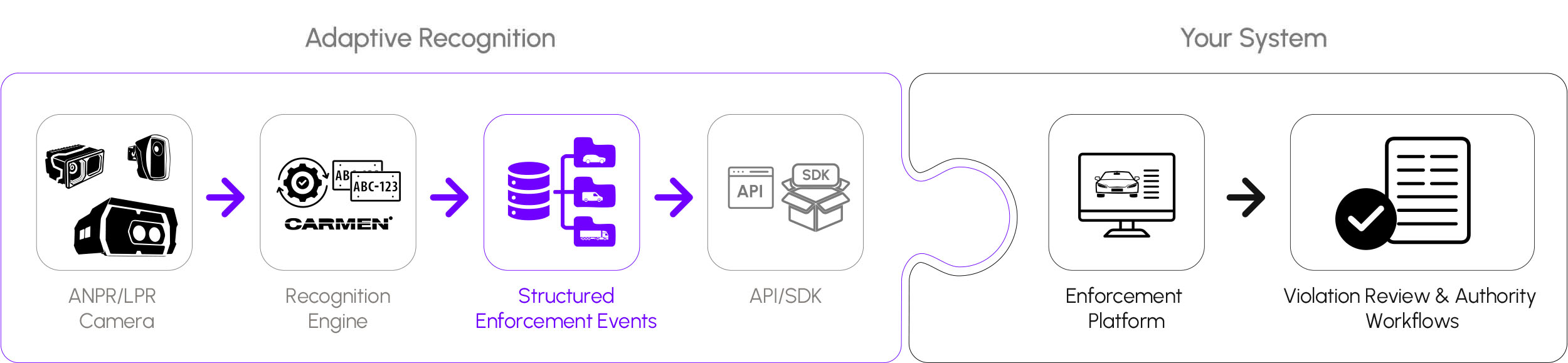
Adaptive Recognition provides the roadside capture, recognition, and management layer for enforcement platforms. Vehicle identity and event data are delivered into the customer system, while violation logic and review procedures remain under authority control.

Beyond Capture:
Keeping Enforcement Systems Operational

Adaptive Recognition supports traffic enforcement deployments beyond the capture point with centralized system visibility, lifecycle services, and video surveillance capabilities that help operators keep enforcement infrastructure running across locations, devices, and operating conditions.

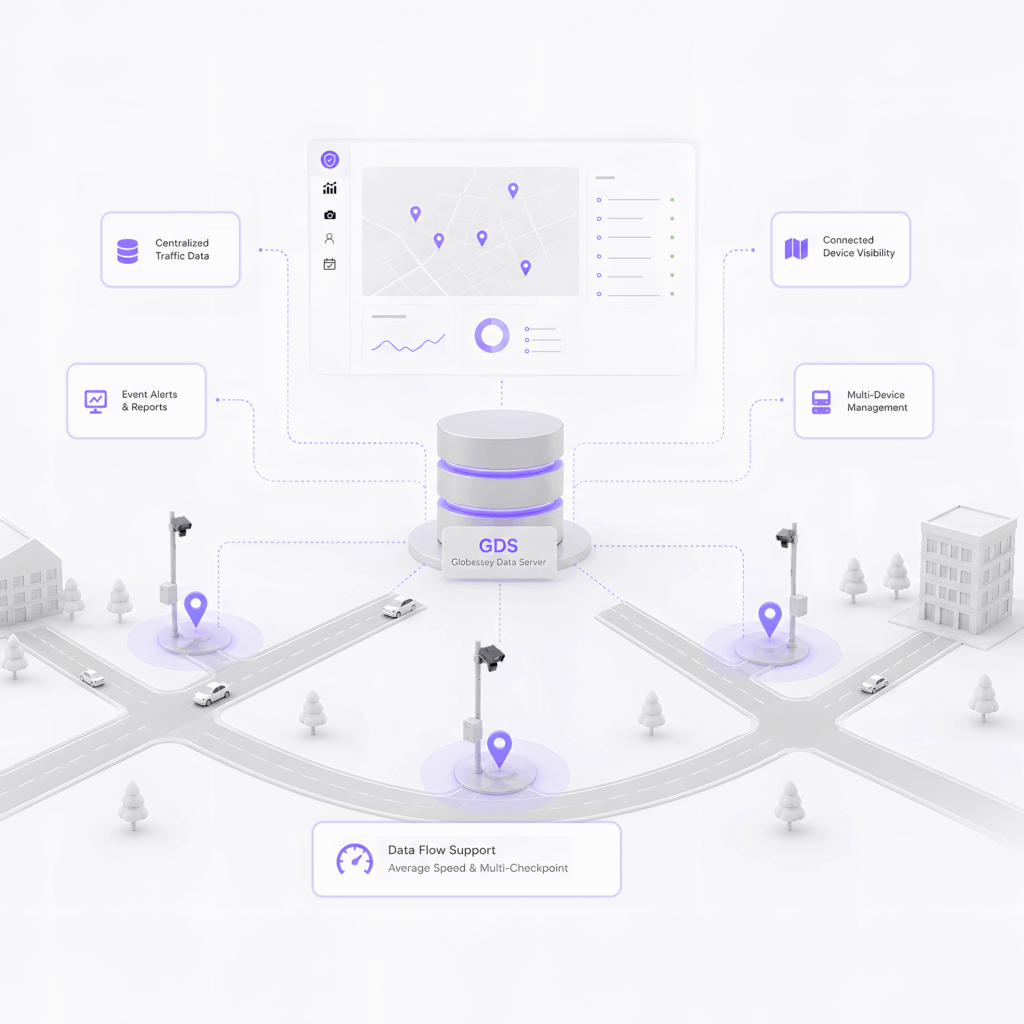
Centralized Management Through Globessey Data Server (GDS)

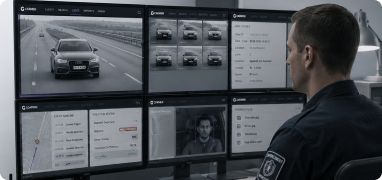
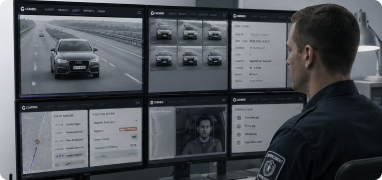
GDS supports enforcement deployments by centralizing traffic data, connected device visibility, event flow, and integration with backend systems across enforcement locations.

  • Centralized traffic data collection and visualization
  • Connected device visibility and map-based management
  • Event filtering, alerts, and reporting support
  • Multi-device management through a single platform
  • Event and data flow management across distributed enforcement programs

SLA-Based Lifecycle Support

Adaptive Recognition Global Services supports enforcement deployments with SLA-based support structures covering monitoring, incident handling, remote diagnostics, and escalation to technical or engineering teams when required.

  • Multi-tier SLA coverage
  • 24/7 monitoring and alerting
  • Ticket triage and escalation
  • Remote diagnostics and intervention
  • Engineering escalation through Adaptive Recognition R&D
  • Lifecycle continuity for long-term deployments

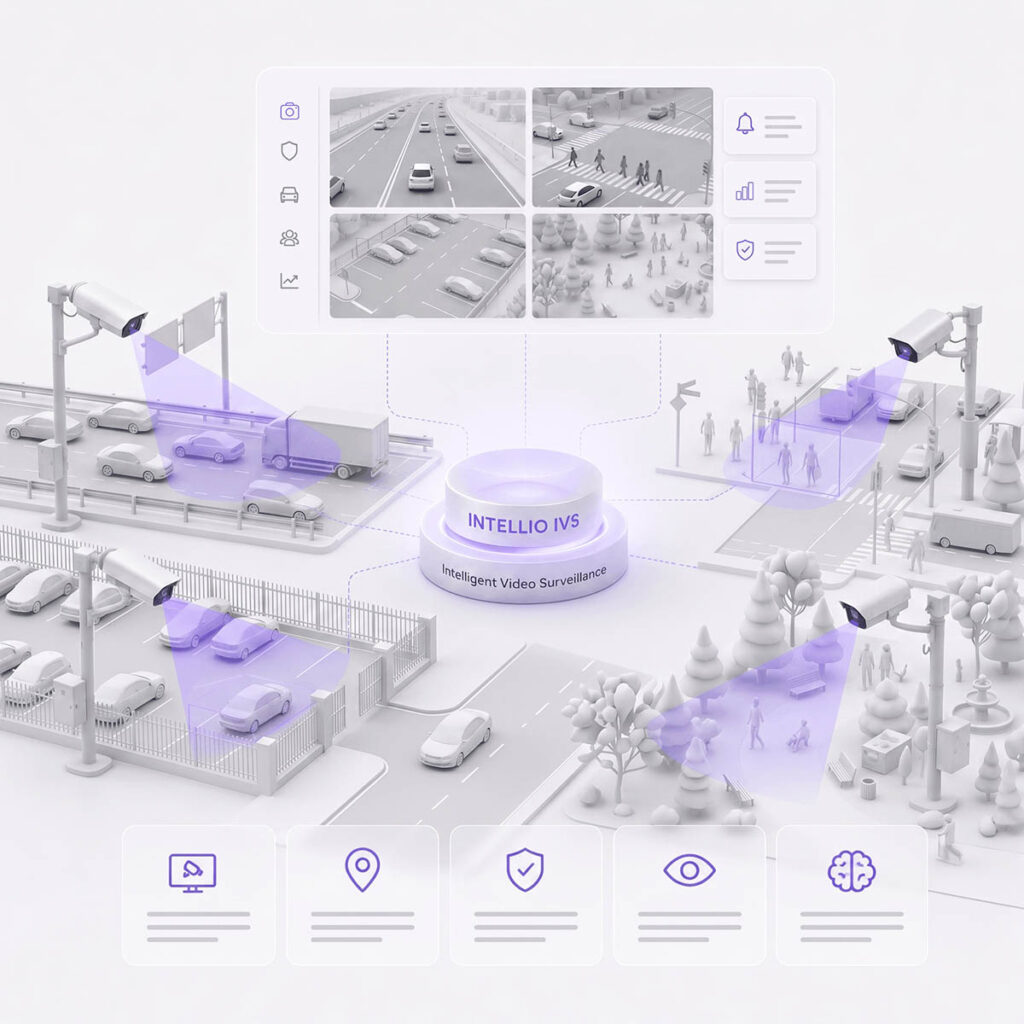
Intelligent Video Surveillance for Operational Awareness

Adaptive Recognition’s Intellio IVS capabilities can support enforcement environments where vehicle recognition needs to sit alongside broader video-based monitoring of roadside, intersection, or operational areas.

  • Video-based situational awareness
  • Scene monitoring around enforcement locations
  • Support for traffic or security monitoring contexts
  • Broader visibility beyond vehicle recognition alone
  • Additional visual context for operators and review teams

What Enforcement Teams
Evaluate Before Deployment

Before traffic enforcement systems are deployed, teams look beyond recognition accuracy. They assess whether the technology can support enforceable records, roadside variability, operational review, and long-term program control.

Confidence in
Enforcement Outcomes


Technology must support records that authorities can act on, review, and defend across real enforcement scenarios.

Program Fit
Across Violation Types


Traffic violation, driver safety, and vehicle compliance enforcement programs place different demands on capture, review, and operational workflows. Adaptive Recognition supports these programs without forcing a generic deployment model.

Consistency
Across Enforcement Sites


Authorities need the same level of vehicle identification quality across roads, intersections, mobile units, and multi-point deployments.

Long-Term
Program Confidence


Enforcement programs depend on technology that remains stable after launch, supported by lifecycle services, monitoring, and escalation where required.

Deployment
Geometry


Camera position, lane layout, trigger points, viewing angle, and traffic flow all affect enforcement data quality. Adaptive Recognition systems are designed to be configured around real roadside and intersection conditions.

Event Handover
to Enforcement Platforms


Vehicle identity and event data need to move cleanly into the customer’s enforcement platform. Adaptive Recognition supports this through structured outputs and documented interfaces.

Multi-Device
Coordination


Fixed cameras, mobile units, intersection deployments, and distributed enforcement locations require coordinated data flow across devices and systems. GDS provides centralized event management and connected device visibility across enforcement locations.

Maintainable
System Architecture


The capture and recognition layer must remain clear, maintainable, and separate from authority-controlled violation logic and review procedures.

Review-Ready
Event Records


Daily review teams need vehicle identity, event context, and supporting data presented clearly enough to assess records without unnecessary reconstruction.

Exception
Case Handling


Unclear plates, difficult lanes, weather, image variation, or driver-related evidence require structured data that helps reviewers understand what was captured.

Operational
Awareness Across Sites


Teams need visibility into event flow, alerts, device status, and system behavior across enforcement locations, not just isolated camera outputs.

Escalation When
Operations Are Affected


When issues occur, SLA-based support, diagnostics, and escalation paths help keep enforcement workflows moving.

Evidence
Defensibility


Traffic enforcement systems must support records that remain traceable from capture through review and audit.

Certification &
Approval Requirements


Enforcement programs often depend on jurisdiction-specific approval, certification, and accuracy requirements. Adaptive Recognition supports certified enforcement use cases where required.

Supplier
Accountability


Public-sector enforcement programs need a supplier that can support hardware, software, services, and escalation over time.

Service Structure for
Long-Term Operation


Adaptive Recognition Global Services can support deployments with monitoring, diagnostics, SLA coverage, and lifecycle service management.

Deployed Across
Traffic Enforcement Environments

Adaptive Recognition technologies support traffic enforcement deployments where vehicle capture, recognition accuracy, and enforcement records must perform under certified, operational, and reviewable conditions.

Ready to Evaluate Your
Traffic Enforcement Infrastructure?

Adaptive Recognition horizontal logo 2024
OUR REFERENCES

Go beyond the claims, see the proof.
Explore our reference projects and
case studies for tangible evidence of
how Adaptive Recognition delivers
exceptional outcomes

OUR RESOURCES

By those who see challenges as opportunities and rewrite the definition of impossible every day
Follow Adaptive Recognition