





Show more

Read more

View product

View report

Drag

Defensible Identity Verification for Banking Environments

Standardized and auditable identity verification supporting secure customer onboarding across branch networks and digital banking channels.

Where Banking Identity Verification Happens

Identity verification in banking occurs across multiple operational environments — from branch onboarding to self-service banking infrastructure and digital verification workflows. Each environment introduces different operational challenges but requires the same outcome: consistent, auditable identity decisions.

Branch Identity Verification

Identity verification during in-branch onboarding requires fast, reliable capture of identity data while maintaining compliance with KYC procedures and audit requirements.

Branch Identity Verification

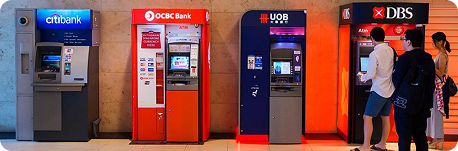
Self-Service Identity Verification

Banks increasingly deploy self-service terminals and video teller machines that require fast, automated identity verification without staff assistance.

Self-Service Identity Verification

Banking Platform Identity Verification

Banking systems and onboarding platforms often require reliable extraction and validation of identity document data as part of customer onboarding and compliance workflows.

Banking Platform Identity Verification

Structured Identity Records,
Ready for Your Banking Systems

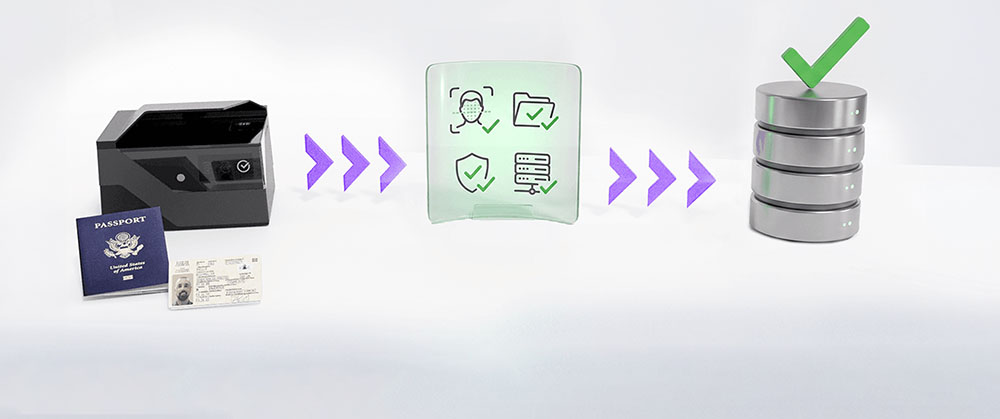
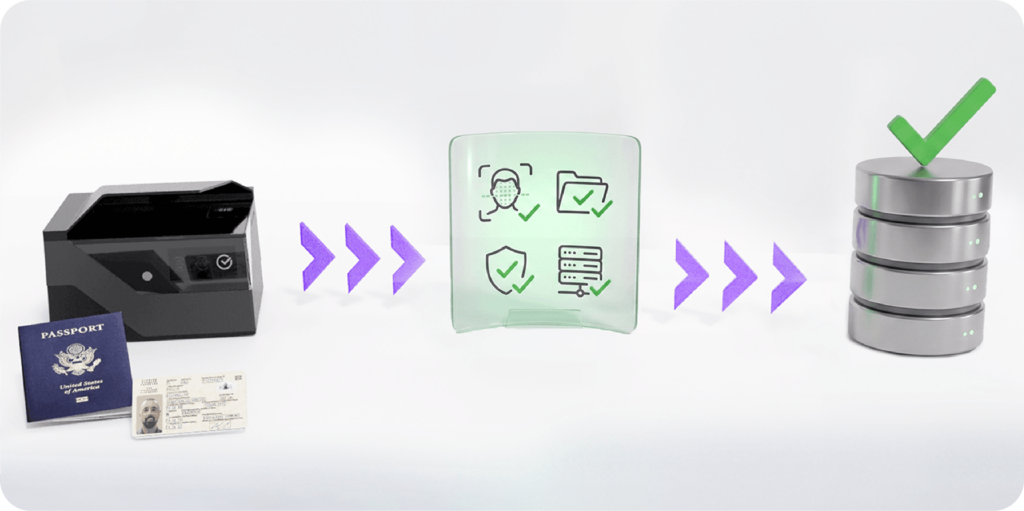
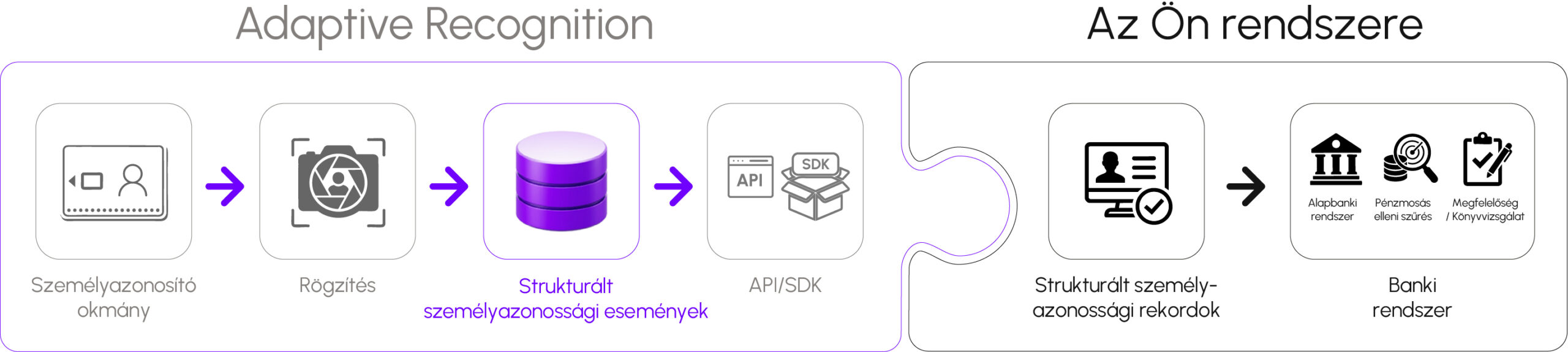
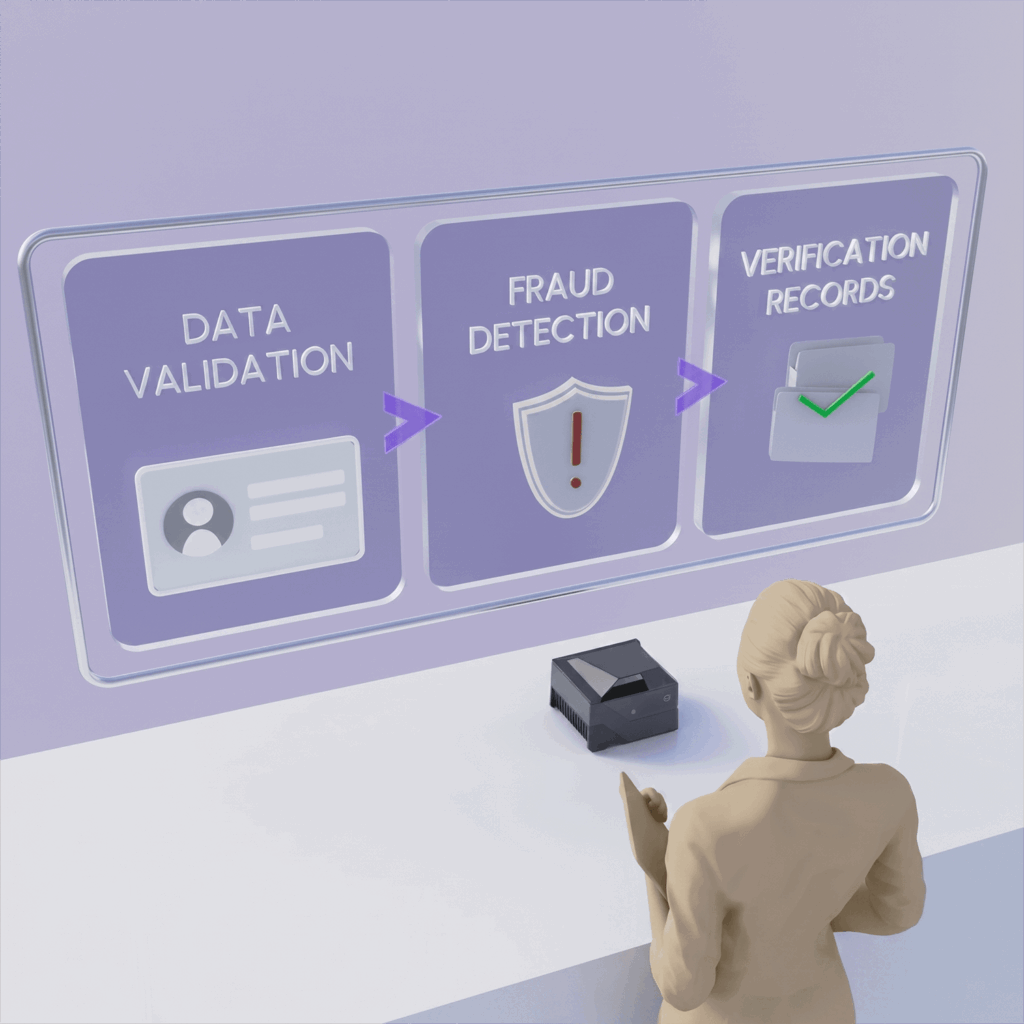
Adaptive Recognition’s technology captures, validates, and structures identity document data during customer onboarding and compliance workflows. The result is a consistent identity verification record that banking systems can process, store, and audit as part of regulated identity controls.

Secure Document Capture

Controlled, reliable identity document reading in branch and service environments — forming the trusted entry point of the verification process.

  • Optical and machine-readable zone extraction
  • Chip reading where applicable
  • Structured identity data generation
  • Direct integration into onboarding workflows
Authentication & Validation Controls

Centralized verification logic that evaluates document integrity and enforces standardized validation rules aligned with KYC and AML frameworks.

  • Document authentication and integrity checks
  • Cross-field and data consistency validation
  • Centralized configuration of validation rules
  • Uniform enforcement across branch and digital channels
Structured, Audit-Ready Output

Verification outcomes are delivered as standardized, traceable identity records — ensuring that decisions remain reviewable under internal audit and regulatory supervision.

  • Timestamped verification logs
  • Validation results and confidence indicators
  • Structured identity data for downstream systems
  • API-based delivery into core banking and compliance platforms

Planning an Identity Verification Deployment?

Identity Controls Must Scale
With the Organization

Identity verification cannot rely on isolated tools or individual expertise. In large financial institutions, identity controls must operate consistently across thousands of transactions, branches, and digital channels, applying the same verification logic everywhere to support reliable onboarding, regulatory compliance, and defensible identity decisions.

Built for Distributed Banking Operations
Adaptive Recognition systems operate across multi-branch financial institutions, supporting consistent identity verification in environments where scale, complexity, and accountability intersect.
One Verification Framework — Across Channels
Our identity verification layer enforces uniform validation logic across branch and digital workflows, ensuring that identity decisions remain defensible regardless of where they originate.
Proven in Regulated Environments
Deployed in high-security and regulated contexts worldwide, our technology supports audit-ready identity decisions under real operational pressure — not controlled test scenarios.
Designed for
Institutional Integration
Adaptive Recognition technology operates as a defined subsystem within banking identity workflows. Identity document data is captured, validated, and delivered as structured verification records that integrate directly into onboarding platforms, compliance systems, and core banking environments.

Supporting Real-World
Banking Identity Operations

Adaptive Recognition technology supports identity verification within core banking workflows where reliable document capture, validation, and structured identity data are required for compliance and operational efficiency.

Customer Onboarding & KYC

During customer onboarding, banks must capture and verify identity document data under formal KYC procedures. Adaptive Recognition identity verification systems automate document capture, authentication, and structured data transfer into onboarding platforms and core banking systems.

  • Automated extraction of identity document data
  • Authentication checks during customer registration
  • Structured identity data delivered to onboarding systems
  • Consistent verification across service points

Document Fraud Detection

Identity verification systems must help detect manipulated or fraudulent identity documents during account opening and customer verification. Adaptive Recognition authentication technology supports automated document validation while generating verification records for fraud investigation.

  • Detection of altered or counterfeit documents
  • Automated validation of document data fields
  • Consistent authentication across verification points
  • Verification records supporting fraud investigations

Regulatory Compliance & Identity Records

Banks must retain verifiable identity records to support internal compliance processes and supervisory review. Adaptive Recognition systems generate structured verification records that remain traceable across banking systems and audit workflows.

  • Structured identity verification records
  • Timestamped verification results
  • Identity data delivered to compliance systems
  • Traceable verification steps for regulatory review

Where Identity Decisions
Must Withstand Review

In regulated banking environments, identity verification is not a convenience feature —
it is a control function that must remain consistent, traceable, and defensible under review.

Consistency Across Distributed Operations
Uniform verification logic across branches and digital channels reduces operational variation and control gaps.
Audit-Ready by Design
Verification outcomes are timestamped, logged, and structured for internal audit and supervisory review.
Reduced Manual Exposure
Structured validation reduces reliance on individual discretion in high-volume customer interactions.
Long-Term Institutional Deployment
Designed for integration into regulated banking infrastructures — not short-term onboarding tools.
What Banking Teams
Evaluate Before Deployment

Before introducing identity verification infrastructure into regulated environments, institutions assess more than feature sets — they evaluate control, governance, and long-term operational impact.

Documented Identity Control


Identity verification operates under defined validation logic aligned with institutional KYC policies, ensuring customer identification is applied consistently and recorded as part of compliance workflows.

Regulatory Traceability

Verification outcomes are stored as structured, timestamped records that can be reviewed during internal audit or supervisory examination without reconstructing prior decisions.

Policy-Aligned Validation

Validation logic can be configured in line with institutional KYC standards, helping ensure identity requirements are applied consistently across service points.

Support for Ongoing Monitoring

Structured identity records remain available for reassessment when AML thresholds change, risk classifications are updated, or additional due diligence is required.

Clear Control Ownership

Identity verification operates as a defined control step within the onboarding process, clarifying responsibility between identity validation and downstream risk or approval decisions.

Reduced Operational Exposure

Standardized verification logic reduces reliance on individual discretion, lowering the risk of inconsistent identity decisions across branches and service channels.

Controlled Validation Configuration

Verification parameters can be configured in line with institutional governance standards, helping ensure identity validation rules are applied consistently across deployments.

Defensible Decision Foundations

Identity decisions are supported by structured verification records, allowing outcomes to be reviewed and defended during internal investigation, dispute, or audit.

Controlled System Scope

The verification layer operates as a defined subsystem, handling identity capture and validation while remaining separate from core banking applications and decision logic.

Standards-Based Integration

Verification results are delivered through documented APIs and structured identity data formats that integrate with onboarding platforms and banking systems.

Security & Access Governance

Identity verification processes support institutional security controls, including role-based access, logging, and controlled system interaction.

Lifecycle & Change Alignment

Verification components and validation logic can be maintained within established release management, configuration, and governance frameworks used by banking IT teams.

Consistent Frontline Execution

Verification standards are applied uniformly across branches and digital channels, reducing variation in customer identification processes.

Reduced Process Friction

Structured identity capture minimizes repeated checks and manual corrections, supporting smoother onboarding and service interactions.

Operational Transparency

Verification outcomes are structured and visible within workflow systems, supporting informed decisions at service points.

Scalable Service Coverage

The verification layer supports distributed branch networks and digital channels while maintaining consistent identity verification practices.

Deployed Across
Regulated Banking Environments

Adaptive Recognition identity verification technologies are deployed within regulated banking environments, supporting institutions that require reliable document capture, authentication, and structured identity data within customer onboarding and compliance workflows.

Passport reader at Georgia border control

Az Adaptive Recognition útlevélolvasói támogatják a határellenőrzést Grúziában

Grúzia Belügyminisztériuma (MIA) telepítette Osmond útlevélolvasó eszközeinket a várakozási idők csökkentése, a nemzetközi szabványoknak való megfelelés, valamint a határellenőrzés biztonságának fokozása érdekében.
ID scanners at Be Live Hotels

Az Adaptive Recognition okmányolvasói egyszerűsítik a vendégnyilvántartást egy karibi szállodaláncnál

A vállalat az Adaptive Recognition ID-szkennereivel gyors és biztonságos vendégregisztrációs folyamatot vezetett be.
Adaptive Recognition horizontal logo 2024
Referenciáink

Ismerje meg referencia-projektjeinket és esettanulmányainkat, és nézze meg, hogyan teljesítenek megoldásaink valós környezetben.

Erőforrásaink

Hasznos anyagok, útmutatók és tartalmak termékeink és megoldásaink jobb megismeréséhez.

Támogatás

Esettanulmányok
Follow Adaptive Recognition