





Show more
Read more
View product
View report
Drag

In regulated financial environments, identity verification is not a feature —
it is a control function. When identity decisions are inconsistent, undocumented,
or weakly integrated, financial and regulatory exposure increases.
To be defensible, identity verification must meet a higher operational standard.
Verification logic must be uniform across branch networks and digital channels. Identity decisions cannot depend on individual discretion or disconnected systems.
AML and KYC compliance requires documented, timestamped verification steps. If a decision cannot be reviewed and defended, it creates liability.
Effective identity verification reduces financial risk across thousands of transactions — not only by detecting anomalies, but by enforcing consistent control mechanisms throughout the organization.
Effective identity verification cannot rely on isolated tools or individual expertise. It must operate consistently across thousands of transactions, branches, and digital platforms — enforcing the same verification logic everywhere.
In large financial institutions, scale is not only about volume. It is about maintaining control across distributed environments.


Retail Branch NetworksWithin multi-branch retail banking environments, our verification layer standardizes identity validation under formal KYC procedures — ensuring consistent capture, authentication, and documentation across distributed service desks.
Digital & Hybrid Onboarding PlatformsAcross digital onboarding platforms and hybrid branch models, our verification layer enforces aligned identity validation logic — maintaining consistency between customer-facing channels and internal compliance frameworks.
AML & Enhanced Due Diligence EnvironmentsIn environments governed by active AML
monitoring, our verification layer supports structured re-validation and traceable identity confirmation when enhanced due diligence is required.
Private Banking & High-Value Service PointsWithin service environments subject to heightened AML scrutiny or elevated transaction thresholds, our verification layer reinforces identity confirmation without disrupting advisory workflows.
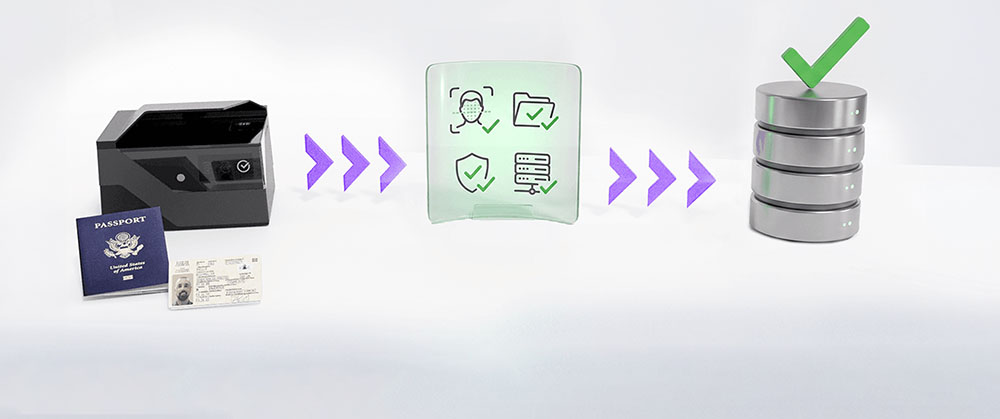
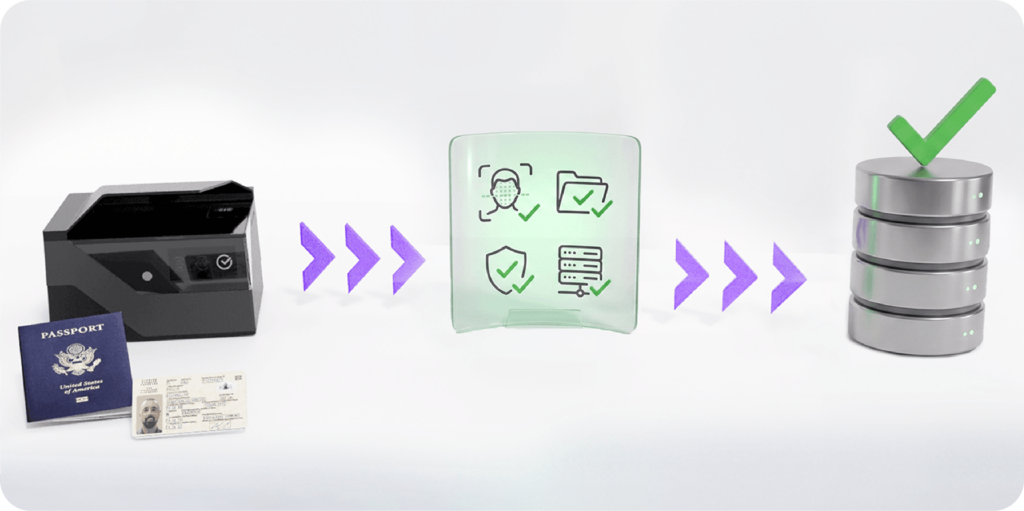
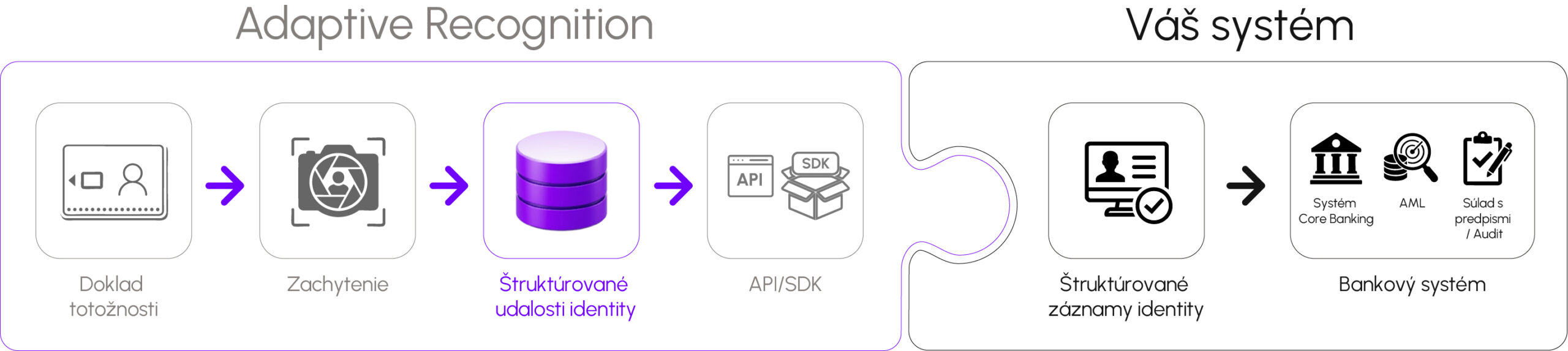
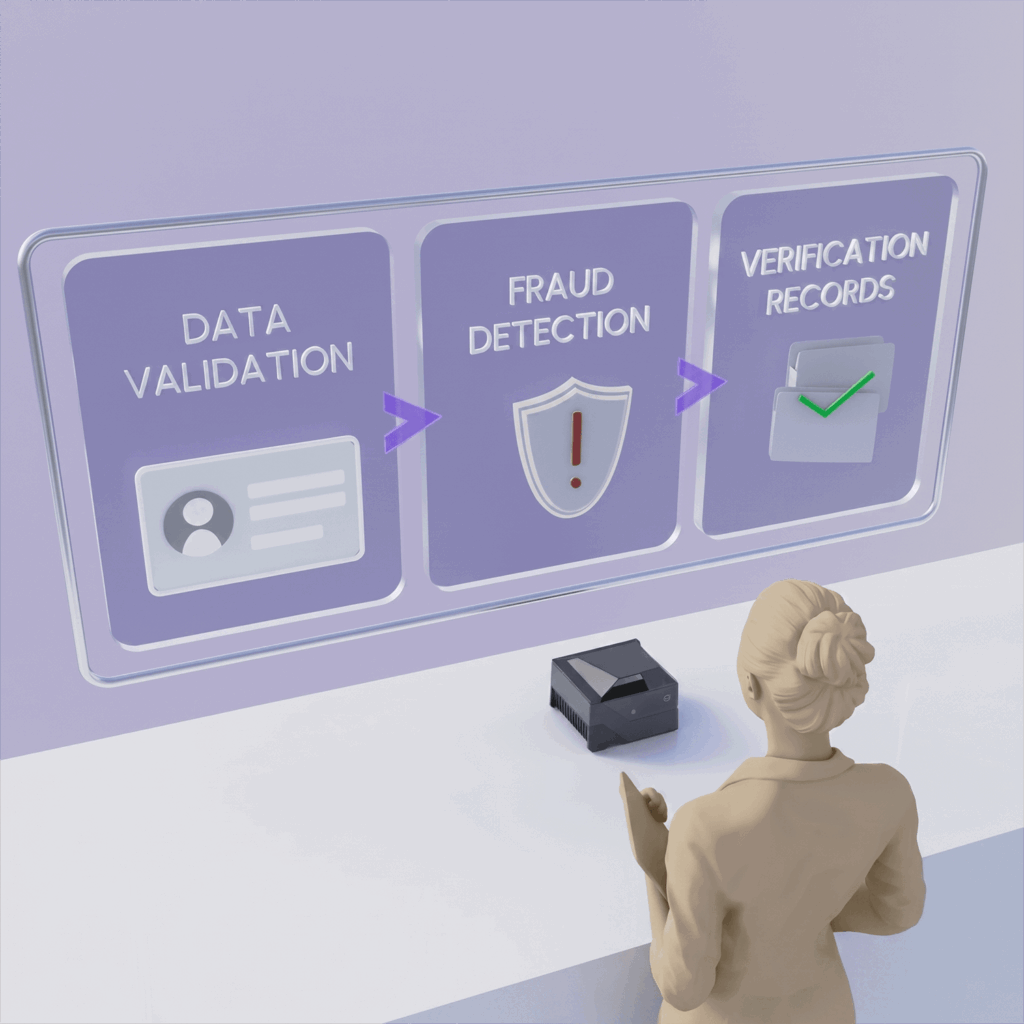
Adaptive Recognition provides the verification layer positioned between identity documents and banking systems. It standardizes how identity data is captured, authenticated, validated, and recorded — embedding defensible controls directly into regulated workflows.

Controlled, reliable identity document reading in branch and service environments — forming the trusted entry point of the verification process.
Centralized verification logic that evaluates document integrity and enforces standardized validation rules aligned with KYC and AML frameworks.
Verification outcomes are delivered as standardized, traceable identity records — ensuring that decisions remain reviewable under internal audit and regulatory supervision.
In regulated banking environments, identity verification is not a convenience feature —
it is a control function that must remain consistent, traceable, and defensible under review.
Pre tých, ktorí hľadajú prelomové riešenia.
Objavte produkty, ktoré posúvajú hranice toho,
čo je možné dosiahnuť.
Každé odvetvie čelí jedinečným prekážkam. Zistite, ako môže byť Adaptive Recognition vaším partnerom pri ich efektívnom riešení a dosiahnutí lepších výsledkov.
Preskočte marketingové tvrdenia a pozrite si dôkazy.
Preskúmajte naše referenčné projekty a
prípady štúdií pre hmatateľné dôkazy
o tom, ako Adaptive Recognition prináša
výnimočné výsledky.